May License Plate Report

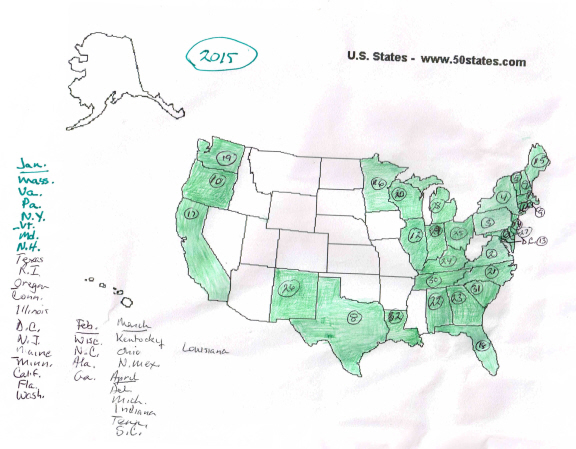
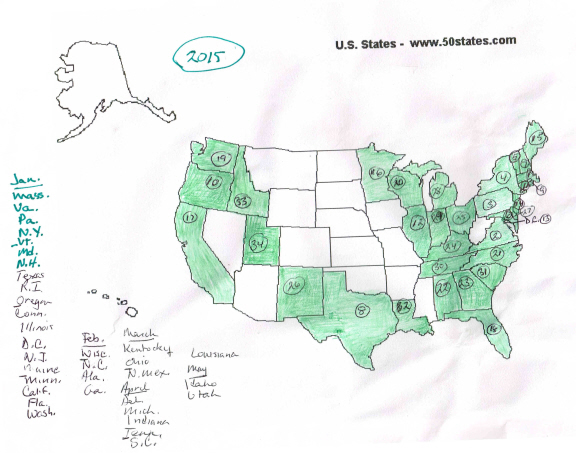
2015 may license map

Idaho and Utah are new on the map this month, for a total to date of 34 — out of 51, because as a former D.C. resident I always include the Last Colony non-state in the tally.

The map seemed a tad colorless for the end of May, so I looked up May for the previous two years. I’d logged 36 by this time in 2013 and 2014, so 2015 isn’t far off the pace. Visually the big states across the nation’s midsection account for most of the difference. In 2013 and 2014 both Colorado and Kansas were colored in. In 2013 so were Nevada and Utah; in 2014 Nevada and Utah were still AWOL, but Missouri had shown up, as it never did in 2013.

On the plus side, Wisconsin is early this year. I’ve seen at least three different Wisconsins. A few days ago, while driving alongside Oak Bluffs harbor, I spied two interesting plates, so I pulled over, parked, and walked back to check them out. One was a South Carolina whose design I hadn’t seen before; the other was Alabama. I had both of them already. Worth the closer look, though.


Posted in license plates | Tagged | 2 Comments

Memorial Day

Memorial Day on Martha’s Vineyard is the quasi-official beginning of “the season,” which is to say the season of crowds, traffic, and unaffordable housing. As elsewhere in the U.S., schools, banks, government offices, and many businesses are closed. Parades are held. The cemeteries come alive with red, white, and blue. Back yards come alive with the sound of romping kids and the smell of grilling hamburgers. We are, we tell ourselves, honoring those who died for our freedoms.

The other day I snagged this cartoon off Facebook because it conveys so well my deep uneasiness about Memorial Day.

mem day cartoon

As I read it, the teacher is guilt-tripping a student for exercising a freedom that the serviceman was wounded defending. The student is tipped back in his chair with his feet up on the desk, as if he’s just being contrary.

It’s brilliant: Exercising one’s freedom is equated with dissing a wounded vet. Rote repetition of the pledge of allegiance must be a more suitable tribute.

In my lifetime the U.S. military has been more actively engaged in suppressing other people’s freedoms than in defending our own, and in any case we defend our freedoms more effectively by exercising them than by repeating platitudes about war. Conversely, we here in the U.S. are doing an excellent job of suppressing our own freedoms with no help from terrorists or anyone else’s military.

As Memorial Day approached, I found myself thinking a lot about Edward Snowden. From the beginning I was more for him than agin him, mainly because I saw him as a direct descendant of Daniel Ellsberg, leaker of the Pentagon Papers in 1971. Only gradually, though, did I come to understand the significance of what Snowden did, which is to say the significance of what he revealed about our government’s threat to our freedoms. (If you haven’t seen Citizenfour, Laura Poitras’s award-winning documentary about what Snowden did and why, I highly recommend it.)

The reaction against Snowden was a feeding frenzy. Pundits and public officials competed to condemn his action in ever more cataclysmic terms, rarely if ever grappling with what his actions revealed. No surprise there: this is our customary national reaction to anyone or anything that makes us uncomfortable. Take a look at the hysteria that followed 9/11, which hasn’t gone away. Attempts to criticize or protest any U.S. military action are greeted with rage and chants of “Support our troops! Support our troops!”

Hodding Carter III takes a hard look at the feeding frenzy, especially the media’s role in it, in “Glenn Greenwald, I’m Sorry: Why I Changed My Mind on Edward Snowden.” He applauds the “few and far between” media outlets who “pressed the print button and revealed the NSA’s dirty linen,” who “sounded the alarm, warning the American people anew of how much further down the road to an all-intrusive garrison state Washington had ventured.”

At the same time he castigates the far more numerous outlets and journalists “who twitched at every government accusation,” who saw no need “to grapple with the meaning of a government that conceived, created, and operated a secret high-tech vacuum cleaner to suck the meaning out of the Fourth Amendment.”

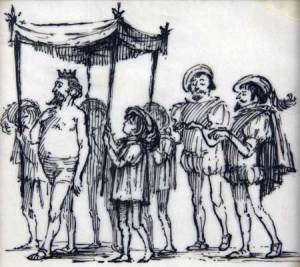
emperor's clothesMy favorite fairy tale has long been “The Emperor’s New Clothes.” Of course I identify with the child who cries out that the emperor is parading down the street with no clothes on. Don’t we all?

But in the U.S. the knee-jerk reaction to such revelations is rage. The child would probably be dragged off her parent’s shoulders and torn limb from limb.

Or maybe she’d just be guilt-tripped for saying rude things about the nice emperor who makes her freedom possible.

So how to maintain some perspective on Memorial Day? It helps to go back to the beginning. In “Forgetting Why We Remember” (New York Times, May 29, 2011), historian David Blight reminds us that Memorial Day began in the wake of the Civil War, in which 625,000 died. “If the same number of Americans per capita had died in Vietnam as died in the Civil War,” he reminds us, “four million names would be on the Vietnam Veterans Memorial, instead of 58,000.” Not surprisingly, he writes, “Memorial Days were initially occasions of sacred bereavement.”

Then he takes us back to Charleston, South Carolina, in the spring of 1865, to the first commemoration of what came to be known as Memorial Day. Here’s a bit of it — but really, read Blight’s whole account.

The largest of these events, forgotten until I had some extraordinary luck in an archive at Harvard, took place on May 1, 1865. During the final year of the war, the Confederates had converted the city’s Washington Race Course and Jockey Club into an outdoor prison. Union captives were kept in horrible conditions in the interior of the track; at least 257 died of disease and were hastily buried in a mass grave behind the grandstand.

After the Confederate evacuation of Charleston black workmen went to the site, reburied the Union dead properly, and built a high fence around the cemetery. They whitewashed the fence and built an archway over an entrance on which they inscribed the words, “Martyrs of the Race Course.”

Then came a parade of 10,000, most of them black freedpeople, led by 3,000 black schoolchildren carrying roses and singing “John Brown’s Body.”

Once Reconstruction ended, and white supremacy returned to Charleston, South Carolina, and the South, the event vanished both from memory and from the official record.

On this Memorial Day, it’s worth remembering.

Posted in musing, public life | Tagged , , , , , , , | 7 Comments

Rocky Mountain Low

For Travvy, the malamute I share my apartment with, breakfast and supper are the high points of the day. Supper usually comes around five o’clock, sometimes before and sometimes after our late afternoon walk. If I’m working at my laptop, he starts reminding me at 4:30 or so. He sits in front of me with expectation in every fur follicle and maybe a little drool coming from his mouth.

Monday I was still working at almost six and Travvy was sacked out on the rug as if he’d already eaten.

Hmm. This was unusual. Not alarming, just out of the ordinary. I gave him his supper, he scarfed it down, and we went for our evening walk. Normal. All normal.
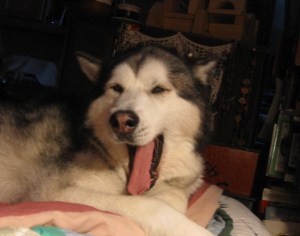
What I often see first thing in the morning

What I often see first thing in the morning

In cool weather I often wake up with Travvy’s backbone aligned with mine, his head pushing mine off the pillow. In warmer weather, he usually listens for my waking-up stirrings, then he jumps onto the bed, curls up next to me, and waits.

When I throw back the covers and yell “Breakfast time for the puppy!” he springs to life, 80 pounds of wriggling fur, leaps off the bed, does a play bow, then goes over to the little rug I feed him on so he and his bowl won’t slip-slide on the linoleum.

Tuesday morning he jumped onto the bed — but he didn’t make it in his usual clean leap. He had to scramble.

Hmm again.

When I yelled “Breakfast time for the puppy!” he roused himself slowly, jumped carefully off the bed, and padded sedately over to the rug.

Big hmmm this time. He snarfed his food down almost as usual, but something was not right.

On our morning walks, Travvy usually trots ahead on his Flexi lead, plumy tail waving, alert to everything, sniffing the bushes and the air to see what’s new since he last passed that way. Tuesday morning he lagged behind. I looked at him as if to say Get a move on. He returned my gaze with Do I have to?

We continued on our way, he did his business — which looked normal — but he didn’t work out of his reluctance, though he did show some enthusiasm when I lured him with a cookie.

Back home, he climbed the outside stairs to our second-floor apartment like an old man. Trav turned seven at the end of February. He’s moving out of “prime of life” and into middle age, but he’s not old. Besides, old age generally doesn’t come out of nowhere and hit you overnight.

I called the vet. I was about 90 percent sure we were dealing with Lyme disease or some other tick-borne ailment. Martha’s Vineyard is tick central. Ticks are everywhere. If you spend any time outside and especially if you’ve got a dog, you’ve got ticks on your mind even when you’re thinking about something else.

Rhodry at a yard sale, ca. 1999.

Rhodry (1994–2008) at a yard sale, ca. 1999.

The late Rhodry Malamutt introduced me to tick-borne diseases (TBDs in the trade) when he was not quite two years old. Overnight he went from healthy active young dog to geriatric case. Turned out he had Rocky Mountain spotted fever.

Travvy wasn’t as lethargic as Rhodry had been, but I was already thinking that he might have it too. Rocky Mountain is carried by wood ticks, also known as dog ticks, though they sure aren’t the only ticks that prey on dogs. Spring is heavy-duty wood tick season on Martha’s Vineyard. I scrape them off Travvy’s legs whenever we get back from a walk. You don’t want to see my tick jar.

Our vet could see us at one. We arrived promptly. Travvy isn’t quite a veterinarian’s nightmare, but he’s no dream either. The prodding, poking, and sticking that goes with a routine exam he takes as a threat to his well-being. I take his teeth, his instincts, and his reaction speed very seriously, which is to say we use a muzzle when he needs to have blood drawn or his temperature taken.

He was running a fever. The blood test for Lyme showed the same low positive it had been showing ever since he had Lyme as a youngster. The other tick tests were negative. However, the veterinarians of Martha’s Vineyard know dogs, ticks, and TBDs very well. They’ve got plenty of day-to-day experience as well as book knowledge and test results.

Rocky Mountain spotted fever, my vet suggested. We might have caught it soon enough that the antibodies weren’t showing up in Trav’s blood yet. My thoughts were running in the same direction.

We talked it over. Rocky Mountain, like Lyme and the other TBDs, responds to doxycycline. It also responds to another antibiotic that only has to be given for 21 days (the usual doxy course is 30) and is somewhat cheaper. Whatever was ailing Trav might not be tick-related at all. The only way to determine that was with further bloodwork, which might run as high as $500.

One thing I like about my vet is that she lays out the options but never acts as though cost doesn’t matter, or as though it shouldn’t matter. It matters big-time. So we weigh most likely against possible, with least likely hovering in the background. We play the odds.
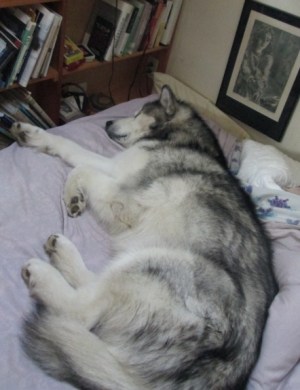
Sleep may not be the best medicine in all circumstances, but it’s cheaper than doxycycline.

In this case the odds were good enough to inspire confidence. It was almost certainly Rocky Mountain spotted fever, but Lyme was enough of a possibility that I decided on doxycycline rather than the more specialized antibiotic. Least likely was a very long shot, but we could hedge our bets: freeze Travvy’s blood sample so that if he didn’t respond to the doxy, it could be tested for the more remote possibilities.

Doxycycline is not cheap, but lucky for my checkbook, my vet had an ample supply of the 100mg capsules in stock. The 100mg pills cost almost twice as much. (Here we took a brief time-out to cuss the pharmaceutical companies.)

The good news is that by Wednesday morning Trav was about 95 percent back to normal. I’d almost swear that he was showing improvement after his first dose of doxy. Rhodry had the same overnight response 19 years ago.

Trav, need I say, is still sleeping on my bed. We are still walking in the woods and around fields that are infested with dog ticks this time of year. I still scrape the ticks off Travvy’s legs when we get home, and keep an eye on him while I work to see if any more of the little buggers crawl out of his fur. When I got Lyme summer before last, I wondered if I would become more reluctant to walk in the woods or let Trav sleep on my bed. It didn’t happen.

As I blogged last fall in “Season of the Risk,” the risks we live with day to day are easier to assess and deal with than the ones we hear about on the news or social media. Which is why I haven’t posted a link to more information about Rocky Mountain spotted fever: the first half-dozen articles I skimmed couldn’t get through a paragraph without alluding to the risk of death and other worst-case scenarios. Look them up if you must, but remembr that the same could be said about getting into your car or walking down the stairs.
Posted in dogs, home, outdoors | Tagged , , , , , | 2 Comments

Two Downed Trees

The snow hung around long enough this winter that I almost forgot what my neighborhood looked like before the snow started falling.

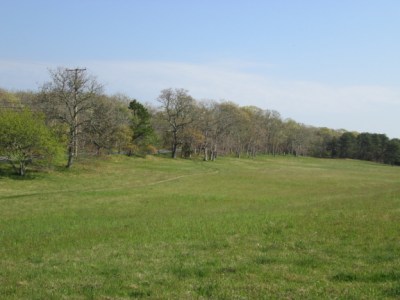
Gradually the snow melted. Gradually spring flowers bloomed and the grass turned green. Now the oaks are leafing out. Soon a layer of yellow-green oak pollen will overlay the dust on my car. (This spring has been very, very dry. I live on a dirt road. Every couple of days I hose off the rear window so I can see out of it.)

Oaks leafing out along Old County Road, May 17, 2015

Oaks leafing out along Old County Road, May 17, 2015

It’s almost as if the winter just past never happened.

Almost.

Most of our snowstorms this past winter came with high winds. One of them toppled a slender birch across a path that Travvy and I often walk. The birch’s many small branches hung down like a curtain, blocking our way. Between the other trees and the heavy scrub on either side, there was no easy detour. Travvy could duck easily under the fallen tree. I had to crouch down and frog-walk through the branches. The branches often scraped the hat off my head.

Evidently other walkers were getting annoyed with the obstruction. One morning all the hanging branches had been trimmed from the trunk. Walking under was easier than walking through. My hat stayed on my head. I was grateful.

The fallen birch was still partly attached to its trunk. It began to leaf out along with its upright companions.

Downed birch leafs out, May 12, 2015.

Downed birch leafs out, May 12, 2015.

Fallen it might be, but it was still attached to its roots and thus to the earth. It lived.

Then one morning the path was clear. No birch.

Dying birch

Dying birch

Clear path, May 13, 2015

Clear path, May 13, 2015

In the summer of 2011 Hurricane Irene brought down a big oak near another path that Travvy and I often walk. I was so sure it was dead that I told a neighbor about it. He heats with wood and is always on the lookout for fuel. This particular downed tree, though, was not easily accessible by pickup, and transporting its logs would be no job for a wheelbarrow.

The following May, to my astonishment, the fallen oak leafed out. Like the birch, it was still partly attached to its trunk. Attached enough to keep it alive.

Downed oak, leafing out

Downed oak, leafing out

My recumbent oak leafed out in 2012, and again in 2013, and again in 2014. So glad I was that no one had turned it into firewood.

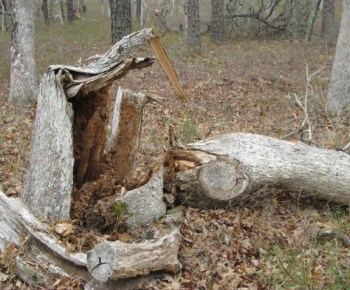
Severed trunk

Severed trunk

This spring there were no buds. Winter had sundered my oak from its trunk.

I think it was winter, not a woodsman. Those clean cuts were made three years ago, to clear a large branch off the trail. Could a person, or even two or three people, have separated tree from trunk and lifted it out of the way? Perhaps, but I’d rather believe it was the winter just past.

In a late March post, “Sunderings,” I blogged about people sundered from their roots, whether by war, economics, or some other nearly irresistible force. Every time I walked by it, my recumbent oak reminded me that even damaged roots can sustain life. The oak was lucky: when the hurricane brought it down, it fell alongside the path, not across it. The little birch was not so lucky: it blocked the way. I’m happy that the way is clear and sad that the birch will never leaf out again.


Posted in Martha's Vineyard, outdoors | Tagged , , , , | 6 Comments

Housing 101

How bad is the housing situation on Martha’s Vineyard? In recent memory (which is to say mine, which goes back 30 years), it’s never been good. No situation is “good” where about 20 percent of the population has to move twice a year because they can’t find an affordable year-round rental or because the only way they can pay the mortgage is by renting their home out in the summer.

But the surge in property values at the turn of the century made it worse, and the economic meltdown of the last decade made it worse yet.

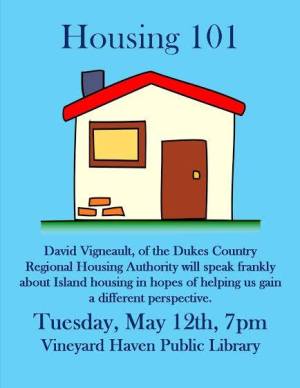
housing 101“The first level of affordability here is a year-round lease, which is virtually nonexistent right now,” said David Vigneault, executive director of the Dukes County Regional Housing Authority (DCRHA), in a Martha’s Vineyard Times story this past winter. “There was virtually nothing this fall for year-round rentals.”
Think about it. Maybe you have to live in a seasonal resort to appreciate what a precious thing a year-round rental is, and how catastrophic the reality behind David’s statement: “There was virtually nothing this fall for year-round rentals.”

I’ve gone on before about housing on Martha’s Vineyard and most certainly will again, but this blog post focuses on “Housing 101,” an event I attended Tuesday night at the Vineyard Haven public library.

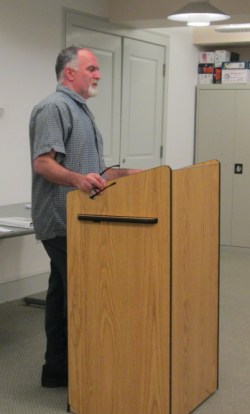
David Vigneault was the speaker. If he’s not the most knowledgeable person on the planet about the Vineyard housing situation, he’s definitely in the top three. He titled his talk “Myths, Half Truths, and Good Questions with Tough Answers.” The purpose wasn’t to give the whys and wherefores of the housing crisis but to address some of the myths and misconceptions about it.

To say that myths and misconceptions abound is an understatement. Given a pervasive and intractable problem with complex economic and political causes, we love to point fingers, blow isolated incidents into universal truths, and come up with ingenious ways to avoid thinking too hard about what’s going on in front of our noses. In this, as in so many things, Martha’s Vineyard is a lot like the rest of the country.

So here are some of the points David made, as imperfectly scribbled down by me. For more details and lots of scary statistics, see the links at the end of this post.

Myth: People move to Martha’s Vineyard because “affordable housing” is available.

David Vigneault at the podium

David Vigneault at the podium

Both the DCRHA and the Island Housing Trust (with which it works closely) focus on the island workforce — teachers, tradespeople, small business owners, health-care workers, municipal employees, and others. You have to have an income to even be eligible, and in today’s climate eligibility is only the first step. People in other places aren’t likely to uproot themselves from their local support systems and move “on spec” to a place where they have neither kin nor jobs, and where the cost of living is considerably higher than the state average.

“Affordable housing,” in other words, is not “poor people’s housing.” That’s another issue.

Myth: Affordable housing goes to “the wrong people.”

Sometimes “the wrong people” means people who weren’t born here. Often it means undocumented workers. David noted that without proper documentation, people aren’t eligible for housing through the DCRHA.

Myth: Morgan Woods isn’t really affordable.

Morgan Woods is a 60-unit affordable apartment complex in Edgartown. Opened in 2007, it’s become a rousing, award-winning success. Turnover has been low, so it’s got a waiting list. The confusion arises because a little over half the units are for tenants with incomes below the area median income (AMI). The others are priced for those earning between 110% and 140% of the AMI. If one of the latter becomes available, a person earning considerably less than the AMI probably won’t find it affordable.

Half truth: The cost of housing isn’t the problem — low wages are.

The “affordability gap” — the difference between what a household earning the median income can afford to buy and the median cost of buying or building a house — is definitely a problem. The Martha’s Vineyard Commission’s 2013 housing needs assessment calculated the gap at $213,500, the second-highest in the state (Nantucket was #1). But the prospects for raising wages in a seasonal, service-based economy are not good, especially in the short term.

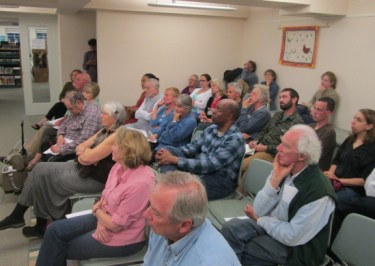
Housing 101 attendees in the downstairs program room of the Vineyard Haven public library.

Housing 101 attendees in the downstairs program room of the Vineyard Haven public library.

Myth (or maybe half truth?): More landlords would rent year-round if it weren’t for all the irresponsible tenants out there.

Tenant-from-hell stories and greedy-landlord stories abound, but as David pointed out, “it’s easy to blackball yourself around here.” Word travels fast, and if you screw up more than once, it won’t be a secret for long. The decision to rent seasonally or year-round is often an economic one. Some year-round residents rent seasonally because they need the money to make ends meet. In the aftermath of the 2008 financial crisis, belt-tightening seasonal homeowners were more willing to rent year-round instead of just for the winter — at a time when financially strapped year-rounders couldn’t afford to take advantage of the opportunities.

Half truth (or myth?): If zoning and other restrictions were removed, the housing problem would take care of itself.

Market forces, David noted, got us into this predicament, so it’s unlikely that the removal of all restrictions would make it go away. At the same time, however, the six island towns have been examining and amending local rules and regs in order to increase the supply of year-round rental housing. Restrictions on density have been problematic on several fronts, notably funding.

The housing crisis is daunting, and it isn’t going away, but David took encouragement from the fact that now there is general island-wide agreement that this is our problem, and that many people are working on it from different angles.

For more info:

Recent stories by Martha’s Vineyard Times reporter Barry Stringfellow on the Vineyard housing crisis:

Martha’s Vineyard Housing Shortage Reaches Critical Mass,” February 18, 2015. A very good introduction to the problem and the history of efforts to deal with it.

Vineyard Homeless Census Raises Questions, Provides Few Answers,” March 4, 2015.

Experts Examine Martha’s Vineyard’s Affordable Housing Crisis,” April 15, 2015. Explores the implications of the housing crisis for employment, with a focus on teachers, and for the general health of the community; emphasizes the need for island-wide cooperation.

Posted in Martha's Vineyard, public life | Tagged , , , , | Leave a comment

Ghost Trees Blooming

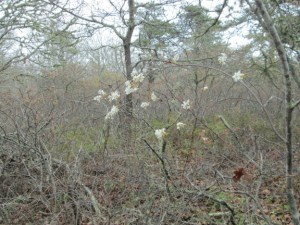
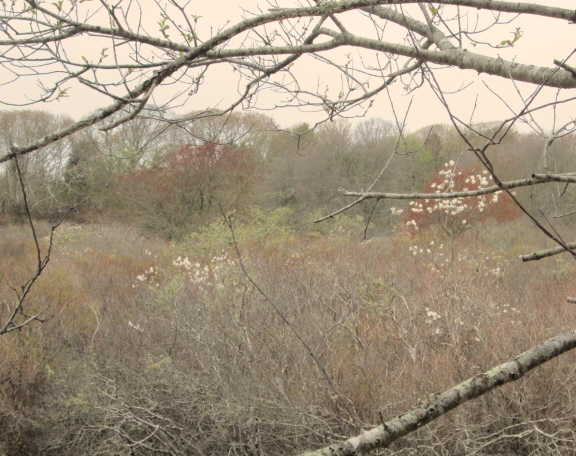
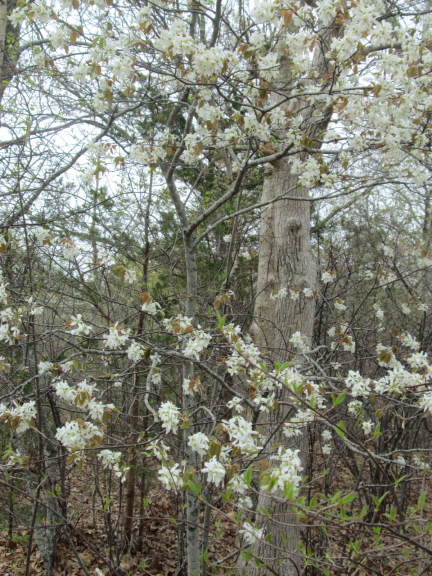
Every year I think I’ve missed the shadbush blooming and every year I’m wrong. Driving down State Road I glance repeatedly into the mostly oak woods that haven’t leafed out yet. When the fragile white flowers appear, they seem to hang suspended in the air against a gray and brown backdrop that is anything but fragile.

20150510 shad 1The shadbush got its name because they bloom when the shad are running. When I blogged about them two years ago, a fellow blogger up the road noted that we have no shad on Martha’s Vineyard so they might be more sensibly called “wild pear.”
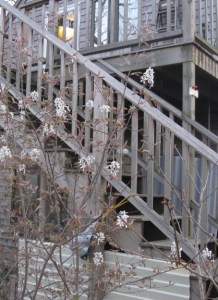
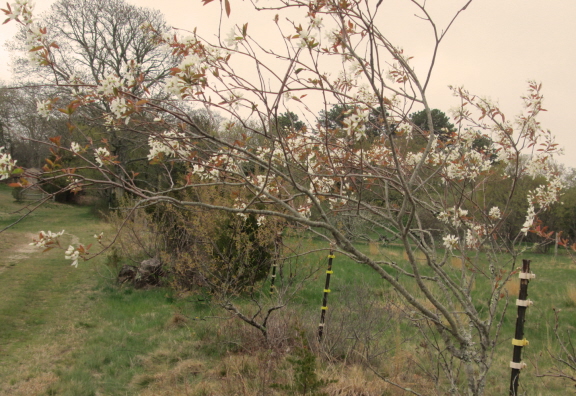
“Wild pear” is indeed one of the names by which this small tree, Amelanchier, is known, along with shadbush, shadwood or shadblow, serviceberry or sarvisberry, juneberry, saskatoon, sugarplum or wild-plum, and chuckley pear. Shad is a subspecies of herring, which we do have here, but “herring bush” sounds fishy.

2014 shade closeupI call them “ghost trees” for the way they appear ghostly deep in the just-past-winter woods. That’s probably as good a name as any. In any case, once again I thought I’d missed them, then a week ago they appeared, tentatively at first, but by the weekend they were everywhere.

When I mentioned them at writers’ group Sunday night, mystery writer Cynthia Riggs noted that her mother, the late Dionis Coffin Riggs, gave May 10 as the date for the blooming of the shadbush.

At the foot of my outside stairs

At the foot of my outside stairs

Sunday was May 10. Not only that, when I found my photos of the ghost trees from previous years, a full half of them were dated May 10 and the rest were dated between the 6th and the 11th.

When I don’t spot the ghost flowers in the woods by the end of April, I get worried. No wonder: I’ve got the estimated time of arrival wrong. Dionis had it right, from years of observation. My camera has it right because it’s programmed to remember dates. Now that “May 10” is imprinted in my non-digital memory, I’m going to stop expecting the ghost trees at the end of April.

It’s May 13 and they’re still here.

Along the Old Courthouse trail

Along the Old Courthouse trail, 1

2015 shad branch

Along the Old Courthouse trail, 2

20150510 shad 2

Can’t remember where this profusion was — Pine Hill or Halcyon Way?


Posted in outdoors | Tagged , | 8 Comments

Focus on Journalism

Twice a week the Vineyard Gazette sends out an e-newsletter that includes links to interesting stories in the current paper and a short editorial commentary. A few weeks ago, the newsletter included an open invitation from publisher Jane Seagrave: the Gazette was holding an “informal focus group” to discuss the paper’s role in the community and what the future might hold.

Eh wot? This was a no-brainer. I was an island journalist for eight years; I’m interested in journalism in general, especially the interplay of print and digital; and I’m obsessed with Martha’s Vineyard and how it works — or doesn’t.

I fired off my acceptance. Turns out my promptness was a plus: response was so overwhelming that people had to be turned away, and the Gazette has promised to hold other such gatherings in the future.

On the appointed date, May 5, I showed up at the appointed hour, 5 p.m., and with a couple of other barely-on-time arrivals was escorted by a Gazette staffer to the newsroom upstairs.

Aside: For those who’ve never visited the Gazette offices: “rabbit warren” doesn’t do the place justice. They’re housed in a dignified old house a block off Edgartown’s Main Street. The business-related offices are wisely located near the front door, where would-be advertisers have half a chance of finding them. The newsroom is accessed by narrow hallways and a staircase that turns often enough that you don’t know what direction you’re facing when you get to the top. Don’t ask me to draw you a map.

 The newsroom was full of people signing in, sipping wine, nibbling hors d’oeuvres, and chatting. I recognized a lot of them. I didn’t recognize a lot of them. I wondered how this many people were going to discuss anything in any depth.

Turns out the organizers were prepared. After a brief introduction by publisher Seagrave, our attention was called to the colored dots on our nametags. These denoted our focus group assignment. My dot was red. I and the other red dots followed the Gazette staffer with the red placard down the stairs to the long narrow production room adjacent to the venerable presses that still print the paper.

Each group was assigned the same three questions:

Question 1

Thinking broadly about the Vineyard Gazette — its history, its place in the Martha’s Vineyard community, its journalism, photography and overall design, its online presence, etc. — what aspects of the Vineyard Gazette do you value most?

Question 2

In an effort to find a sustainable business model in an era of declining print subscriptions, newspapers across the country are experimenting with different approaches to get readers to pay. Thinking about the Vineyard Gazette, please give your reactions to the following business models:

Online paywall — Access to articles on the Vineyard Gazette website would be restricted to people who had a subscription. Some number of views would be available before a user would be prompted to provide a password.

NPR model — Users of the Vineyard Gazette website would be asked periodically to donate voluntarily to sustain journalism.

Membership model — The Vineyard Gazette would provide additional benefits to “members” to support a subscription fee, e.g., exclusive content, access to special events, merchandise premiums, discount coupons.

Question 3

Thinking in more detail about a membership model, what types of benefits might entice you to pay to become a “member” of the Vineyard Gazette. Please provide reactions to these ideas or offer your own.

• Exclusive events, such as a series of interviews with newsmakers, panel discussions on current events, or social gatherings with other members.

• Additional content, such as special reports, booklets or email alerts.

• Merchandise, such as clothing featuring the Vineyard Gazette insignia.

• Discount coupons to Island events or vendors.

Semi-random thoughts and impressions

The focus on economic sustainability was no surprise. Print journalism is in trouble and/or in transition, depending on how you look at it. It’s amazing that a place the size of Martha’s Vineyard can sustain two weekly newspapers, period. And with the digital age well under way, many of us have become accustomed to accessing an array of high-quality content without paying for it. It’s all too easy to forget that producing that high-quality content takes time and skill, and that most of the producers need to make a living.

The crowd was older rather than younger. At almost 64 I was probably around the median. My strong sense from both the small group I was in and the report-back plenary session at the end was that the majority were summer people and relatively recent arrivals. I surmised this partly from the number of people I didn’t recognize but mostly from the number of comments that oohed and aahed about the Gazette’s design and photography and how it gave people a connection with “the island community.” In my experience, longtime year-rounders don’t talk like that. We don’t need a newspaper to connect us to “the island community”: we’re up to our hairlines in it.

These were, predominantly and not surprisingly, “Gazette people” as opposed to “Times people,” as in Martha’s Vineyard Times people. (New York Times people and Gazette people overlap significantly.) Needless to say, both groups are large and diverse, but still I strongly suspect that a focus group that comprised mostly longtime year-rounders and native islanders would have different ideas about what the Gazette was doing well and not so well, what role it should be playing in “the community,” and how to sustain it.

The guy who appointed himself moderator of the red group justified it with his credentials: he’d been in IT for 17 years and worked abroad. This set my teeth on edge because it is so effing typical: summer people, year-round summer people, and recent arrivals pulling rank because their off-island credentials are more significant than what we longtimers know about living here. This was not, however, the time to bring up that particular us/them split. Besides, he did an OK job of moderating.

Just about no one liked the NPR fundraising model of periodic pitches for money. In discussing membership schemes, several people spoke against being, or appearing to be, “exclusive.”

But I can’t stop wondering if sustainability for the Vineyard Gazette might require building on its long history as the summer people’s paper. I was among those who noted that over the last couple of decades, the Gazette has become less a summer people’s paper and an Edgartown paper; its island-wide coverage and its connection with the local arts scene is much stronger than it used to be.

But its summer base is still there. It’s better off economically than the year-round working population. Exclusivity is a fact of life on Martha’s Vineyard, and it’s largely based on money and socioeconomic class. Those on the more privileged side of the divide often don’t see this.

And the year-round working population doesn’t need a newspaper to tell us what’s going on in the community because, like I said above, we’re up to our hairlines in it. We’ve got other sources of information. Those sources aren’t as accurate or packaged as attractively as the Vineyard Gazette, but they’re free.

And so is the Martha’s Vineyard Times.

Posted in Martha's Vineyard, public life, technology | Tagged , , , , | 5 Comments

April License Plate Report

2015 apr license plate

Once the snow melted, the traffic started moving again. April was a pretty good month. Delaware and South Carolina — as usual the East Coast’s last holdouts — both showed up. The Upper Midwest is filling in nicely.

This year’s Tennessee was on Béla Fleck and Abigail Washburn’s gorgeous touring bus, which was parked outside the high school when I and 600+ other Vineyard people went to their April 15 concert at the Performing Arts Center.

When I biked into the parking lot at up-island Cronig’s the other day, with Travvy on the Springer beside me, I spotted something interesting. I made a sharp right turn to check it out, nearly running Travvy over in the process. It was Louisiana. Totally worth it, though Trav was a little miffed.

Posted in license plates | Tagged | 2 Comments

Spring Planting

From late January till early March the snow was so deep at Misty Meadows that on our morning walks Trav and I avoided the big meadow that is usually on our route. Since then we’ve been walking around it again, watching winter recede and spring coming in. Snow drifted high along the windbreak near the horse pastures. Even after snow stopped falling and the sun grew warmer, those drifts took a long time to disappear completely. They’ve been gone a few weeks now.

This meadow belongs to a conservation organization. For years the weeds grew wild. Occasionally they were trimmed. Once or twice in the eight years I’ve lived nearby, a controlled burn was done in part of the field. Mostly the field lay fallow and weedy. When we walk along its edge, Trav keeps an eye out for voles and pounces when he spots one. So far he’s never pounced fast enough.

Trav watches the goats.

Trav watches the goats.

Lately, though, it’s been put to work. Late last fall, a flock of goats took up residence at the end of the field nearest Old County Road. Travvy, of course, found them fascinating. So did I.

“Goatscaping” has become quite the thing on Martha’s Vineyard. Goats will eat almost anything. I’m told there are no fewer than three businesses that will lease their goats to help householders clear brambles, scrub, and poison ivy from areas where humans tread warily.

Last fall, this particular flock hung out for a while in the little meadow across from the West Tisbury School. Then they moved up the road apiece. From here they went up to the big pasture on the neighboring horse farm. Before the snow started falling in January they disappeared. One of these days I’ll learn where goats go in the winter.

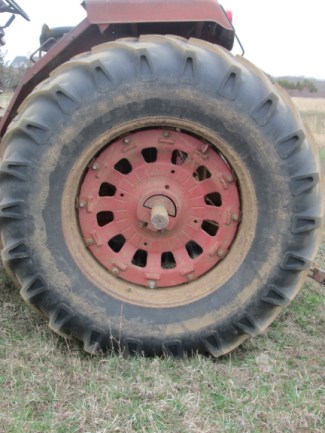
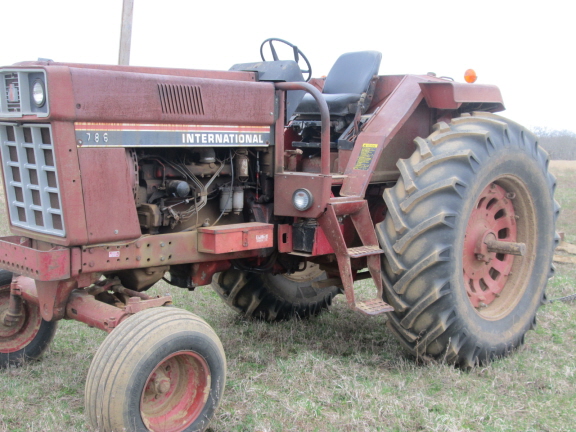
20150420 tractor tireSince spring got under way, there’s been action further up the field too, closer to the bike path, where migrating geese congregate in the fall. Harrows appeared, and a humongous tractor. This tractor’s rear wheels are as tall as I am — about 5′ 4 1/2.”
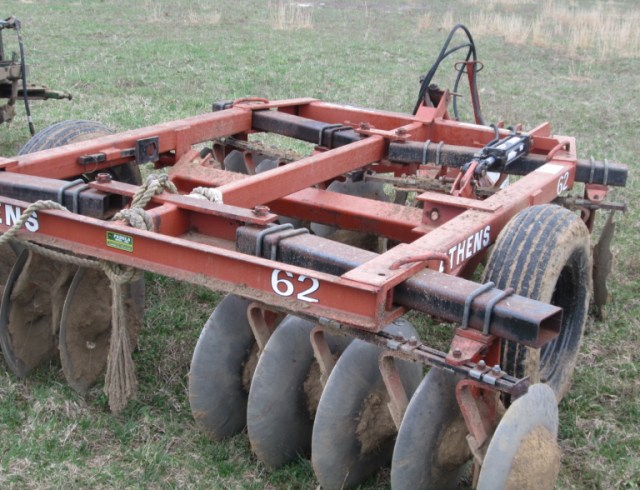
Like much of the farm machinery in use on the Vineyard, these implements were not new. As a high schooler in the 1960s, my summer job involved making hay for a small local farm in my hometown west of Boston. These implements were probably old then.

Once a large section of the field was plowed and harrowed, alfalfa was planted. No, I don’t recognize alfalfa seeds. I can barely even see them. But I can read the writing on the seed bags.

North Tabor Farm and Mermaid Farm, both in Chilmark, have leased this meadow from the conservation organization. Mermaid Farm has livestock (it’s a dairy as well as a farm), but I don’t think North Tabor does. Who gets the alfalfa? In my horsekeeping days I learned a fair amount about hay. Plenty of hay is grown on the Vineyard, but not enough to feed all the horses, cows, and other livestock. So it comes in great truckloads, mostly from upstate New York and Canada, and it ain’t cheap. So if what this field produces is destined for the local market, it’ll almost certainly find appreciative buyers.

Meanwhile, Travvy and I plan to watch it grow.

The whole tractor

The whole tractor

Disk harrow (I think)

Disk harrow (I think)

Posted in Martha's Vineyard, outdoors, technology | Tagged , , , , , , | Leave a comment

All Hail Kale

I know some people out there still believe there’s some kind of barrier between social media and the F2F world — you know, the physical world where people meet face to face, like at town meeting — but on Martha’s Vineyard this is not true. For many of us, social media and the F2F world mesh together in interesting, sometimes unexpected ways.

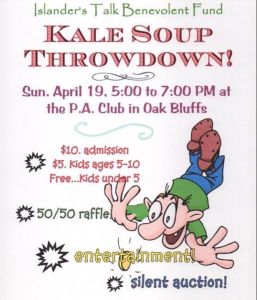
throwdown posterTake the Kale Soup Throwdown that happened this past Sunday at the P.A., aka the Portuguese American Club, aka one of the very most important F2F locales on the Vineyard.
The throwdown was conceived, coordinated, and publicized mostly on Facebook, but with plenty of legwork done in the F2F world by flesh-and-blood people.

Back up a couple of steps. Islanders Talk is a very large (five minutes ago it had 4,101 members) Facebook group that describes itself as “a great place for Islanders to hang out and vent, share whatever you want without tourists interrupting!” The MV Stuff 4 Sale group is bigger — currently closing in on 6,ooo members — but it’s focused on buying and selling, not on hanging out and talking and sharing information.

Way before anyone even dreamed of a digital age, island people had a long tradition of helping each other out, in good times and especially in emergencies. We’re still at it.  Emergencies can strike at any time. They can involve anything from health to housing. Thus the idea of the Islanders Talk Benevolent Fund was born, to help friends, neighbors, and kin over the rough spots.

How to fund the fund? Well, chili is the centerpiece of a long-running and very successful fundraiser, the Big Chili Contest sponsored by MVY radio and held every year in deep winter to benefit the Red Stocking Fund. Kale soup is a staple of Portuguese-American cookery, which is to say it’s a staple of Martha’s Vineyard cookery, and has been since long before the health-food people went nuts for kale.

20150419 front desk

For a $10 admission, you got a generous sample of all the soups and a ticket you could use to vote for your favorite.

The call went out for the island’s kale soup masters. Meanwhile organizers divvied up the island’s towns to solicit donations for the silent auction. (A copy of my Mud of the Place joined Shirley Mayhew’s Looking Back: My Long Life on Martha’s Vineyard and photographer Lynn Christoffers’s Cats of Martha’s Vineyard as an auction item featuring West Tisbury writers.)

On a picture-perfect Sunday afternoon, attendees were greeted by no fewer than six different kale soups, table after table of silent auction prizes, a raffle for a little tree lavishly decorated with scratch tickets, and a long counter groaning with cookies, cupcakes, brownies, and other sweets.

And by a lively and growing crowd that included both longtime friends and Facebook friends who’d never met face to face before. Oh yeah — and Sabrina and the Groovers provided the soundtrack for browsing, yakking, and eating.

It was, in a word, cool, and it netted $3,627 for the Islanders Talk Benevolent Fund. Even better, Islanders are already Talking about doing something similar in the fall, maybe with barbecue?

20150419 kale heads

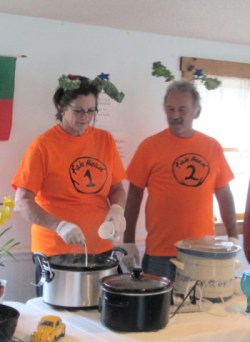
Kale Head 1 and Kale Head 2 — they weren’t kidding about this — dish the soup.

20150419 kale 1

Dave Oliveira presiding at the soup pot — the Oliveiras’ kale soup won the people’s choice award.


Posted in public life | Tagged , , , , , | 2 Comments