June License Plate Report

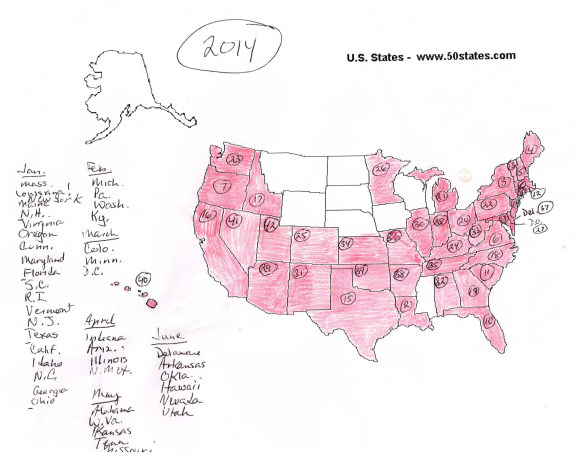
2014 june license map

An excellent haul for June: Delaware, Arkansas, Oklahoma, Hawaii (!!), Nevada, and Utah, bringing the YTD total to 42. Nine to go — I include D.C., last colony and my onetime home, so the goal is 51.

Arkansas was at the West Tisbury post office. The top of the plate was obscured by the plate holder so I had to get really close to make sure it wasn’t Alabama. Speaking of Alabama, I’ve spotted it several times this year, on at least three different vehicles. What’s up with that?

Driving home from Oak Bluffs late one afternoon, I found myself heading toward Vineyard Haven instead of down Barnes Road. Once I realized what I was doing, I kicked myself. The Barnes Road route is a little longer in distance but usually shorter in time, especially in summer, especially during rush hour, which this was: about 4:45 p.m. Nothing to do but stop-and-start my way down the Beach Road and enjoy the view: Vineyard Haven harbor on the right, Lagoon Pond on the left, sailboats and other watercraft here, there, and everywhere.

Rolling toward Five Corners I was going slow enough to spot Oklahoma in a small parking lot. Who-whee! So that was why Malvina Forester took the Vineyard Haven route! (My car has a mind of her own.)

As it turned out, that was only part of the reason. Having made it through Five Corners, Malvina and I proceeded up State Road. The traffic coming into town was heavy, cars were backed up on the Edgartown–Vineyard Haven Road, and no one was going faster than about 15 mph. What should I see coming toward me but the distinctive rainbow plate of — Hawaii!!

More than once I’ve seen Hawaii on the front end of a vehicle but Massachusetts on the back. It’s the back end that counts, so I watched my side-view mirror as the car rolled past me. Hawaii on the back too!

That was more than enough excitement for the month, but Nevada and Utah both showed up in the last week. June was a very good month.

Of the AWOL states, Wisconsin, Iowa, and Wyoming aren’t uncommon, and most of the rest are possible. North Dakota, on the other hand . . .

Funny thing about North Dakota: Two guests joined the Sunday night writers’ group a couple of weeks ago. He’s doing research at WHOI (pronounced “who-ie”; the Woods Hole Oceanographic Institution, which is — you guessed it — across the water in Woods Hole). She’s working on a mystery set in and around Woods Hole. When they’re not in Woods Hole, they live in — wait for it — Fargo, North Dakota.

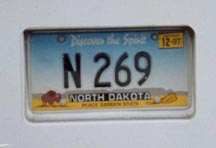
Proof

This is the last North Dakota plate I spotted. As you can see from the 1997 expiration date, it’s been awhile.

Be still, my beating heart. Had they brought their car over? No, their car was in North Dakota. Of course I had to explain the license plate game, and why North Dakota looms so large in it. It seems some friends of theirs from Fargo who also have a WHOI connection occasionally drive to Woods Hole. “Let me know if they ever decide to bring their car to the Vineyard,” I said.

Could the sighting of bona fide residents of North Dakota be a harbinger of things to come? Here’s hoping . . .


Posted in license plates | Tagged , , , | 4 Comments

The Morgan Comes to Call

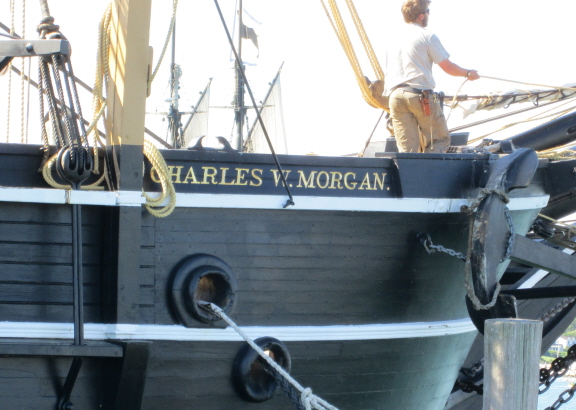
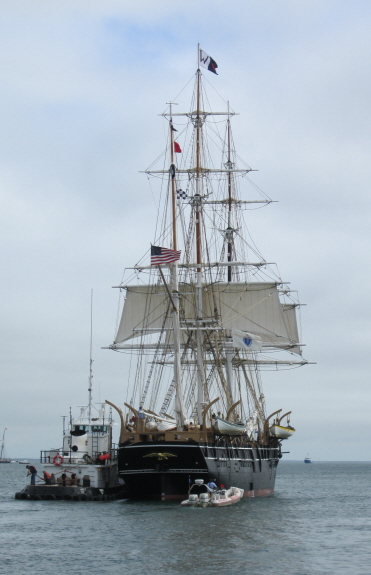
The Charles W. Morgan sailed into Vineyard Haven harbor on Wednesday, June 18, escorted by a local flotilla and her companion ship, the Roann. Built in 1841, the bark Morgan is the last of the U.S. whaling fleet, which once numbered more than 2,700. After several decades wharf-bound at Mystic Seaport, she’s been beautifully restored with painstaking attention to detail. She’s currently on her 38th voyage. The 37th ended in 1921.

Aside: The Mystic Seaport website offers loads of information about the Charles W. Morgan, its history, its restoration, and its 38th voyage. Be warned, though: Every time I visit, I forget what I came for and spend an hour wandering around gawking.

The Vineyard Gazette covered the visit in spades. Time spent on their website will be well rewarded. I particularly recommend this story about Matthew Stackpole, a West Tisbury resident who grew up at Mystic Seaport, has known the Morgan all his life, and is now the ship’s historian.

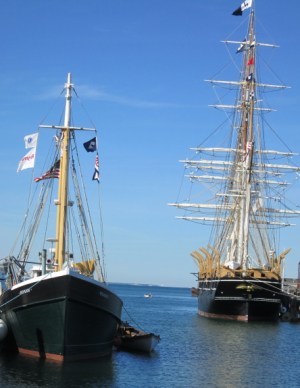
The Roann (left) and the Charles W. Morgan in Vineyard Haven harbor

The Roann (left) and the Charles W. Morgan in Vineyard Haven harbor

The Morgan has many, many Vineyard connections. Several of her captains were Vineyard men, starting with the first, Thomas Norton. Many of her crew members over the years had Vineyard hometowns. During her recent sea trials and on her current voyage, she’s accompanied by the eastern-rig dragger Roann, which was built in 1947 for a Vineyard Haven captain, Roy Campbell. Like the Morgan, the Roann is now a permanent exhibit at Mystic Seaport.

I paid my first visit to the Morgan on Saturday afternoon the 21st. The U.S. Slave Song Project Spirituals Choir, in which I sing and sometimes drum, had just sung at a Juneteenth celebration at First Baptist Church in Vineyard Haven. Juneteenth marks the end of slavery in the United States, and both the Slave Song Project and the Spirituals Choir exist to keep the stories and songs of the enslaved Africans alive. So you know history was much on my mind as I walked up the Charles W. Morgan’s gangplank.

name

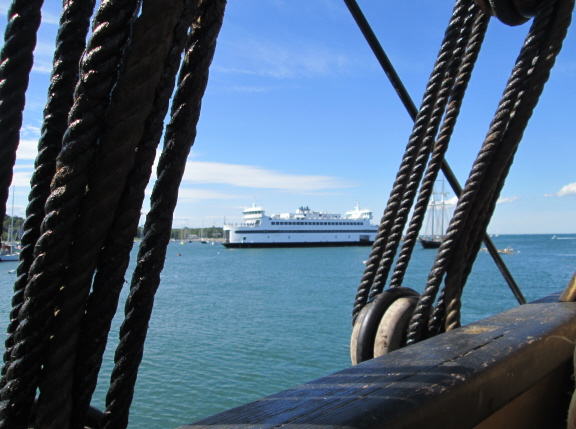
The ferry Island Home seen through the Morgan's rigging

The ferry Island Home seen through the Morgan’s rigging

The three-masted Morgan is a bark, meaning that the fore and main masts are square-rigged and the mizzen mast is rigged fore-and-aft.

The three-masted Morgan is a bark, meaning that the fore and main masts are square-rigged and the mizzen mast is rigged fore-and-aft.

Bowsprit

Bowsprit

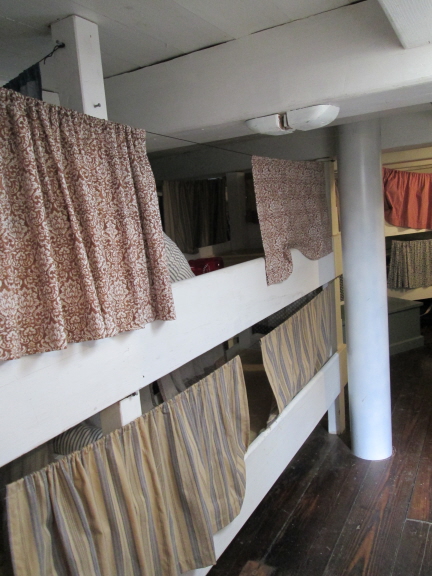
The fo'c's'le (forecastle), where the crew slept. The Morgan is "beamy," relatively wide, which means there was room for each crew member to have his own bunk. The bunks were relatively long -- up to six feet -- but the headroom wasn't much.

The fo’c’s’le (forecastle), where the crew slept. The Morgan is “beamy,” relatively wide, which means there was room for each crew member to have his own bunk. The bunks were relatively long — up to six feet — but the headroom wasn’t much.

My most lasting impressions of whaling probably derive from reading Melville’s Moby-Dick many, many years ago. I knew that whaling voyages could last three to five years, that whaling was a dirty and dangerous business. Ocean travel in the Age of Sail was dangerous whether whaling was involved or not. Thomas Mayhew Jr., son of the man who established the first European settlement on Martha’s Vineyard, was lost at sea on a voyage to England in 1657.

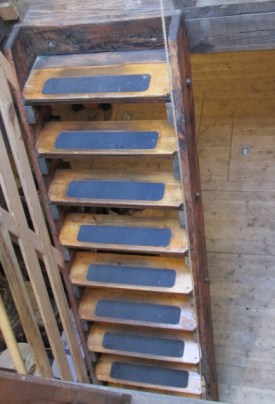
The stairs between decks are steep and narrow.

The stairs between decks are steep and narrow.

You don’t have to look far today to see evidence of the Vineyard’s whaling heritage. Among the properties owned and managed by the Martha’s Vineyard  Preservation Trust are the Old Whaling Church and the house built in 1840 for Dr. Daniel Fisher, a whaleship owner. Two of the four giant murals painted by the late Stan Murphy in Katharine Cornell Theatre (where the Spirituals Choir sang Saturday night) feature whales. In one, whalers pursue a whale on rough seas; the tiny whaleboat is dwarfed by the sky, the ocean, and the whale. In the other, Moshup, the giant of Wampanoag legend, holds a whale aloft by the tail while standing in the waters off the Gay Head cliffs.

But walking around the ship that once carried 35 men around the world in pursuit of whales, knowing that some of those men were the ancestors of your friends and neighbors — this makes it real in a new way. Imagine living and working at such close quarters with men who spoke different languages and often could barely communicate with each other. Imagine receiving a letter from a kinsman at sea and knowing that it was already at least three months out of date. You didn’t know for sure if your kinsman was alive or dead until his ship came within hailing distance of home. No wonder so many old songs tell of sailors returning after long absence to find everything changed. In “Bay of Biscay” the sailor returns as a ghost.

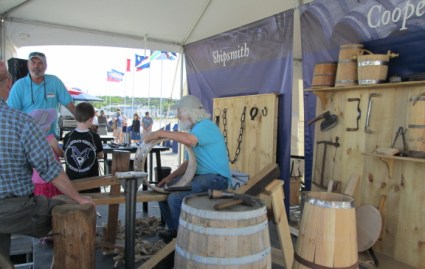
The cooper (barrel maker), smith, and carpenter were indispensable members of a ship's crew.

The cooper, smith, and carpenter were indispensable members of a ship’s crew.

On my second visit, I went aboard again, but this time I spent more time browsing the exhibits. Under one tent, sea shanties were being sung and first-person accounts of whaling voyages being read. In another, a six-minute video played continuously, giving a concise demonstration of what was involved in whaling. The Stellwagen Bank National Marine Sanctuary had its own exhibit, offering not just information but kid-friendly activities. Under yet another tent, the trades essential to a ship’s functioning were displayed and demonstrated. Flipping through a notebook that listed the officers and crews of all 38 of the Charles W. Morgan’s voyages, along with their place of residence, age, and height, I noted that the crew members with Vineyard hometowns decreased over time while those from Cape Verde and other places increased. A quote from Herman Melville noted that very few whaleship crew members were U.S.-born, though many of the officers and mates were.

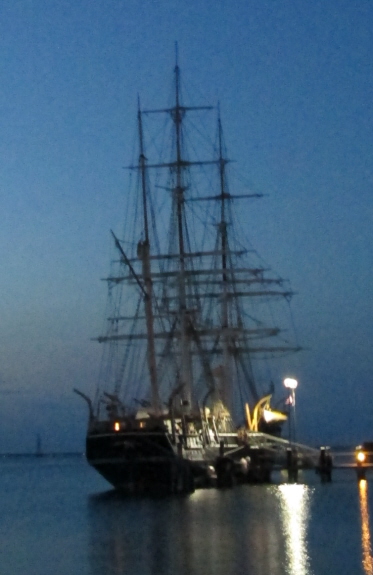
The night before the Morgan's scheduled departure, I paid another visit to the dock.

The night before the Morgan’s scheduled departure, I paid another visit to the dock.

A map showed the Morgan‘s many ports of call. In the South Atlantic, the African coastal port was so close to one in Brazil, destination of so many Africans captured and sold as slaves. Had the Charles W. Morgan ever carried slaves below deck? If the area wasn’t crammed with barrels of whale oil, there might have been room. Slave trading was illegal by the time the Morgan was built, but it was also profitable.

Poking around online, I learned that some whaleships did participate in the slave trade, but that they were often scuttled after the voyage — to conceal the stench of human trafficking? The Morgan’s very survival may testify to her innocence in this regard.

Wednesday morning, the 25th, I went down to the harbor to see her off. Plenty of others had the same idea.

The Roann headed out while her big sister was still at her berth.

The Roann headed out while her big sister was still at her berth.

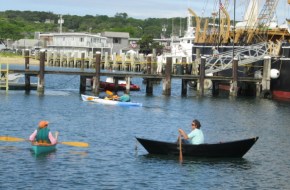
Small boats gathered to watch the Charles W. Morgan prepare to depart. 20140625 dogs on boat20140625 small boats


Fore and main topsails ready to be unfurled

Fore and main topsails ready to be unfurled


Here’s a short video of the Morgan being pushed away from the dock and getting under way:

Off she goes, well escorted.

Off she goes, well escorted.

Unwilling to lose sight of her, dozens of us followed the road out to West Chop, abandoned our vehicles by the side of the road, and got as close to Vineyard Sound as we could.  The wind direction in Vineyard Sound was all wrong, so she was under tow (she doesn’t have an engine) till she passed through Quick’s Hole and started her run up Buzzards Bay to New Bedford, her old home port. So we didn’t get to see her under anything close to full sail. It was a thrill nonetheless.

Farewell, Charles W. Morgan. Farewell.

20140625 off west chop

Posted in Martha's Vineyard, technology, tourism | Tagged , , , , , | 2 Comments

Creative Economy?

In the last two weeks, I’ve been attempting to blog about two related events. One was my discovery that preview tickets for mainstage shows at the extensively renovated Vineyard Playhouse now cost $50. The other was the proclamation of the Vineyard Haven Harbor Cultural District in — you guessed it — downtown Vineyard Haven. Bile and snark do not a good blog post make so I’ve been floundering.

Both events are symptoms of “the creative economy,” with which some policy wonks have been much enamored in recent years, not only on Martha’s Vineyard but across the commonwealth. The underlying idea is that the arts are good for business. On the Vineyard, this means that they attract tourist and summer visitors and thus bolster the seasonal economy.

What this does is turn “the arts” — performing arts, visual arts, all kinds of art — into a commodity, something that can be bought and sold and measured on balance sheets, that is valued because of its ability to do this. What does this do to the arts, to our notions of what art is? Hardly anyone is talking publicly about that, at least not on Martha’s Vineyard. Martha’s Vineyard is a theme park: whatever draws paying customers is good, right?

But at the same time — “If not me, who?” It’s another form of the seasonal occupation. Not for nothing is this blog called From the Seasonally Occupied Territories. After working out the snark and bile during many walks in the woods, I got down to the first-personal aspect of it all. Here goes.

Then . . .

I got roped into island theater not long after I arrived as an apprentice year-rounder in the mid-1980s. The late Mary Payne, founder and artistic director of Island Theatre Workshop (ITW), believed every sentient being should be involved in theater. (This included several dogs as well as most humans.) She wouldn’t take no for an answer. “I can’t” was out of the question.

Rehearsing "Paper Whites" for the Vineyard Playhouse's Spring Short-Play Festival, ca. 1993

Rehearsing “Paper Whites” for the Vineyard Playhouse’s Spring Short-Play Festival, ca. 1993

I did PR. I sat in on rehearsals and ran errands. I stage-managed a couple of productions and learned how a show was built, from auditions through rehearsals to opening night. A year or two later, I was a part-time proofreader at the Martha’s Vineyard Times when the features editor said she needed a reviewer for an Apprentice Players — ITW’s youth program — production of As You Like It  I’d never reviewed theater, but I knew the play, and I’d reviewed plenty of books and a few concerts over the years. I volunteered — and went on to become the Times‘s main theater reviewer for five years or so.
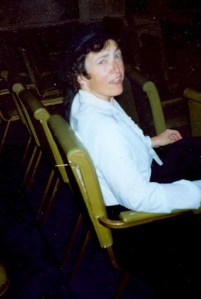
Waiting to go on as Mrs. Winthrop in the 1999 ITW production of "The Secret Garden"

Waiting to go on as Mrs. Winthrop in the 1999 ITW production of “The Secret Garden”

By the mid-1990s, I was variously involved at the Vineyard Playhouse, stage-managing, acting, serving as a  juror for the New England new play competition started by playhouse director Eileen Wilson.

This immersion in theater greatly affected my writing. I wrote three one-acts, all of which have been successfully staged. To this day, in writing fiction I’m often the stage manager, watching the actors onstage and recording their actions in my prompt script. Other times I’m the director, actively blocking the scene till something clicks and the actors take over.

The late ’80s and most of the 1990s were a golden age for Vineyard theater, and for grassroots arts in general, especially the performing arts. This was also the heyday of Wintertide Coffeehouse, in which I was heavily involved from 1986 to 1994.

The Vineyard music scene is still thriving, but grassroots theater is a shadow of its old self. Mary Payne died in 1996; she was only 64. The Vineyard Playhouse struck off in a professional direction. Two creative dynamos left the island — first Yann Montelle and then Bob Dutton. (Yann, last I heard, was working in New Zealand. Bob, after almost two decades working, teaching, and raising a family in Florida, has returned to the Vineyard.) Economic changes have had a big impact: the cost of housing has gone up and up and up, and when you’re working double-time to pay the rent or mortgage, you don’t have much time to volunteer. Theater will eat up all the time and energy you’ve got.

. . . Now

Earlier this month I went to the summer opening at the Martha’s Vineyard Museum. When I arrived, a skit was in progress under the big white tent in the courtyard: an excerpt from The Whaleship Essex, which was about to open at the Vineyard Playhouse. I missed the beginning but was very impressed by the actors. I wanted to see the play. The playhouse recently reopened after a two-year, multimillion-dollar renovation. Having acted, staged-managed, and watched dozens of shows in the old space, I was curious about that too.

Tickets to summer mainstage shows at the Vineyard Playhouse are too much for my scrawny budget, but preview nights — in effect, full dress rehearsals that are open to the public before opening night — are traditionally cheaper.

At home later, I went to the Vineyard Playhouse website, chose a seat, filled in all the required blanks, and eventually arrived at the checkout page. There it turned out that preview tickets cost the same as regular tickets: $50. Not possible. I backed out, cancelled my seat reservation, and logged off.

In April I went to see a semi-staged reading of Cymbeline, the latest offering of Shakespeare for the Masses. I’ve become a huge fan of this series, the brainchild of Nicole Galland and Chelsea McCarthy. Shakespeare’s plays are abridged and read by island actors, nontraditionally cast, with additional narration and the occasional footnote provided by Nicki. Admission is free; donations are welcome. I’d happily pony up $5 or $10 to see it.

Shakespeare for the Masses is a throwback to the heyday of Vineyard theater. Officially it’s sponsored by the Vineyard Playhouse, but during the playhouse’s reconstruction, it’s played in various locations, most recently Katharine Cornell Theatre. Before Cymbeline a Vineyard Playhouse board member gave a pep talk about the extensive, almost-complete renovation of the playhouse. Seat and stairs were still available for endowing, he said.

For how much? asked someone in the audience.

$10,000 for a stair and $3,500 for a chair, he said –or maybe it was the other way around. You could feel the interest dissipating. Shakespeare for the Masses does not draw an endowing, which is to say a well-endowed, crowd.

Says the Vineyard Playhouse website: “We believe that theater has the power to transform lives.”

I know from experience that this is true. I also know that my transformation couldn’t have taken place in a world of $50 tickets and a mostly professional theater, or without the dynamic and often visionary leadership that was around in the early 1990s. Says a League of Women Voters motto, “Democracy is not a spectator sport.” Neither are the arts. Once upon a time, “the arts” were part of many Vineyarders’ lives. They still are, though you have to look and listen harder to find them.

“All the world’s a stage,” wrote the Bard. True enough. But by insisting that the arts can and should be a paying proposition, the “creative economy” controls access to that stage and slowly but surely transforms how we think of creativity and the arts. It really does deserve more discussion than it’s been getting.

Coda

When this blog was new, almost three years ago, I raised some of these questions in “Whose Arts & Ideas?” They’re still worth addressing. And I still think the graphic is a hoot.

arts & ideas experiment 3a

Posted in Martha's Vineyard, tourism, writing | Tagged , , , , , , , | 5 Comments

Resilience

In early May — on the afternoon of Sunday, May 4, to be precise — a brushfire scorched some woods that Travvy and I often walk by. Firefighters from several towns put the fire out PDQ, before it could spread to the residence, the nursery school, or the school buses nearby.

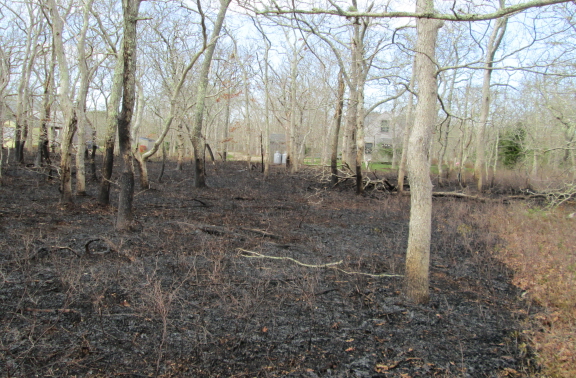
But the visual transformation was dramatic. So was the acrid smell in the air. Ordinarily this area is thick with scrub oak, ferns, brambles, huckleberry bushes, and other undergrowth. The fire wiped the forest floor clean.

The firefighters held the line. At the far left through the trees is the nursery school. The house to the right belongs to the housing authority.

The firefighters held the line. At the far left through the trees is the nursery school. The house to the right belongs to the housing authority.

Travvy on the unscorched path

Travvy on the unscorched path

Travvy and I walk past this spot almost every day, and often more than once. We’ve been monitoring the changes. As May progressed, the oaks leafed out, as they were doing everywhere else in the neighborhood. At ground level, the place was still charred. The smoke smell diminished except when it rained. We didn’t have much rain in May.

Then as May turned into June, green started reappearing on the ground.

June 6, 2014

June 6, 2014

Ten days later, the ground was even greener. New growth is slowly covering the charred fallen branches. The scorch marks seem to be fading on the trunks of the trees.

June 16, 2014

June 16, 2014

What a difference a scant six weeks can make.


Posted in outdoors | Tagged , , , | 2 Comments

How to Be a Good Tourist

In early April a story appeared in Business Insider: “How NOT to Behave in 12 Countries Around the World”. Water was still freezing in Travvy’s outside water dish, but the spring spruce-up was already under way at down-island shops and restaurants. What a brilliant idea, thought I, and immediately started soliciting suggestions from fellow year-round Vineyarders on how not to behave on Martha’s Vineyard. Here’s a sample.

Many, many responses had to do with motor vehicles.

  • “If you drive a Hummer (or similar), you will bring out the worst in us. We think you look ridiculous and no, we are not impressed.”
The Bad Parking Paparazzi are everywhere. If you are an able-bodied person, don't think of parking in a handicapped-only space.

The Bad Parking Paparazzi are everywhere. If you are an able-bodied person, don’t think of parking in a handicapped-only space.

  • “We profile cars with NY, NJ, and CT license plates, so be on your best behavior. Park sensibly and don’t run down anybody in a crosswalk.” Cautionary note: Bad Parking on MV is a very popular Facebook group. It currently has 855 members. The idea is to take photos of inappropriately parked vehicles and post them on Facebook. The Bad Parking Paparazzi are everywhere.
  •  “Never toot your horn! There’s is no reason to toot your horn on Martha’s Vineyard.”
  • “Please learn how to disable the car alarm on your rental before it goes off and you’re fumbling and blustered, or miles away from the car. Better yet — who is going to steal it? Don’t even set it.”
  • “Don’t set the alarm when your vehicle is on the ferry’s freight deck. They’re always having to page people whose alarms are going off. Seriously, who’s going to steal your car off the boat?”
  • “This is not Disneyland. We drive on these roads!”

Courteous pedestrian behavior is also appreciated:

  • It's usually only this bad at the Tisbury Street Fair.

    It’s usually only this bad at the Tisbury Street Fair.

    “Sidewalks are not mosh pits. When walking two, three, or four abreast on a sidewalk, please notice the person walking singly, head-on, trying to pass, and step aside for them. Please don’t walk into them.”

. . . As is courtesy to the environment:

  • “Even if it’s customary to discard rubbish on the beach and in the street in your country, it’s reviled here. Don’t do it, ever.”
  • “RECYCLING IS A WAY OF LIFE HERE.”

. . . And consideration for the people who wait on you in shops and restaurants, and for all the Vineyarders trying to go about their lives:

  • “Tipping in restaurants is mandatory.”
  • “Martha’s Vineyard is not a theme park. Treat us like humans, dammit. In stores, look us in the eye and say ‘thank you.’ Take the change from our hand to your hand, don’t expect us to put it on the counter so you don’t have to touch us. When on the roads, look at your speedometer and then drive half that fast. DON’T BE IN A HURRY! You are, ostensibly, on vacation.”
  • “READ the sign. Don’t just ‘look’ at it; read it. All of it. Questions? Read it again.”
  • “Respect that you have the finances and time to come to the island and enjoy it. Think about the islanders that work 24/7 to make this beautiful home a place for you to vacation. Be blessed to have an islander help you, but again respect the fact that because you are here does not make you deserve to be treated any different. Respect is earned as well as given. Be blessed.”
  • “Don’t name drop, either your name or somebody else’s. Your good behavior is far more important to us than ‘who’ you are or who you know. Be who you are and let us accept you for just that. Don’t cut in line. Don’t compare us to where you’ve been or where you come from.”
  • “We don’t care HOW you do it in New York.”
  • “Be courteous, polite, thoughtful, aware that you are visiting someone’s home. Be joyful, and have fun.”
Posted in tourism | Tagged , , , , , | 14 Comments

Summer’s Here!

No, the solstice is still a couple of weeks off, but summer is here. It just arrived, and I have proof. Lots of proof.

Like this morning I took my first outdoor shower. It’s been ready and waiting for a while now. The water was on; there was soap in the soap dish and a towel hanging from the hook under the stairs. But the chill in the early morning air was saying “Not quite yet” — until this morning.

I did the Great Seasonal Clothing Switch before Memorial Day — Memorial Day was late this year — but I didn’t pull the flannel sheets from my bed till Friday. On the other hand, I may run out of clean socks before I run out of clean undies and this is for sure a warm-weather phenomenon. In cool or cold weather, the same pair of socks can be worn for several consecutive days. In warm weather — yecchh.

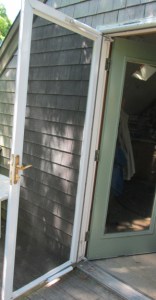
Screen in, door still open

Screen in, door still open

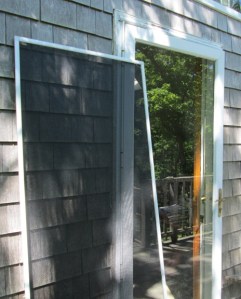
Screen insert, ready for the swap

Screen insert, ready for the swap

Not till this morning did I know it was time to swap the cold-weather insert for the screen in my storm door.

After Trav and I got back from our walk, I did it.

This involved several trips up and down stairs, wrestling the screen out from storage behind the big hutch in my neighbor’s studio, then wrestling the heavier, less flexible cold-weather insert into its place. I was wearing cutoffs and a WisCon 22 T-shirt. When I got done I was, well, warm.

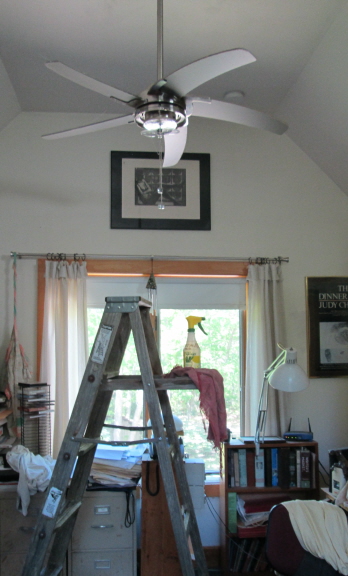
I was also on a roll. Late yesterday afternoon I decided against turning the ceiling fan on. It was warm in the apartment, the air wasn’t moving — but the fan hadn’t been on since last October. From below, the blades looked awfully fuzzy. Visualizing the blades spinning dust bunnies and cobwebs all over my apartment, I decided to let it go till tomorrow.

20140608 ladder & fanTomorrow had arrived. I brought the old step ladder in from the deck. The closer I got to the fan, the gladder I was that I hadn’t turned it on last night.

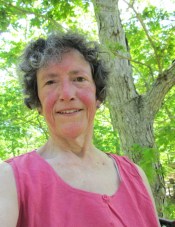
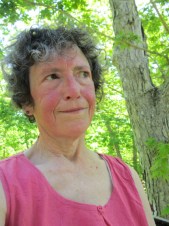
Note spray bottle of dusting mixture (1/4 cup vinegar per quart of water) and dust rag on the shelf. Would they be equal to the job?

Briefly I considered hauling out my trusty vacuum cleaner. But the vac is bulky and the ladder rickety, so self-preservation won out over efficiency. I would dust the grunge onto the floor and then vacuum the carpet. (The malamute in residence hasn’t quite finished blowing his winter coat, so the carpet can always use vacuuming, even if I’ve vacuumed the day before — which I hadn’t.)

This I did. As I moved the blades counterclockwise, I couldn’t help noticing that each one in turn was perfectly aimed at my throat. Marie Antoinette on a step ladder? No, thanks.

After vacuuming the floor, I turned the fan on.

20140608 fan

At this moment I knew that summer had finally arrived. At 11 a.m., having completed two less-than-strenuous household tasks, I was ready for another shower.

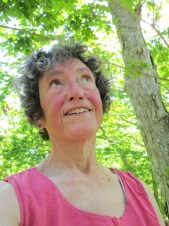
Instead, I changed my damp WisCon 22 T-shirt for a dry, super-lightweight tank top. Tank top and cutoffs? It’s summer for sure.

20140608 selfie 1

20140608 selfie 3

20140608 selfie 2


Only one sign of summer was missing: Travvy was stretched out on his mat next to my feet, while I kept half an eye out for ticks hiding out in his fur. My second-floor studio apartment is pretty comfortable through the summer, but hot air rises and someone can’t take his coat all the way off. Trav’s favorite summer hangout is at the foot of the stairs.

But no, wait! He’s getting up! He’s heading for the stairs . . .

20140608 foot of stairs

It’s official: summer’s here. Travvy says so.


Posted in home | Tagged , , , , , , | 3 Comments

Return of Hoo Rah

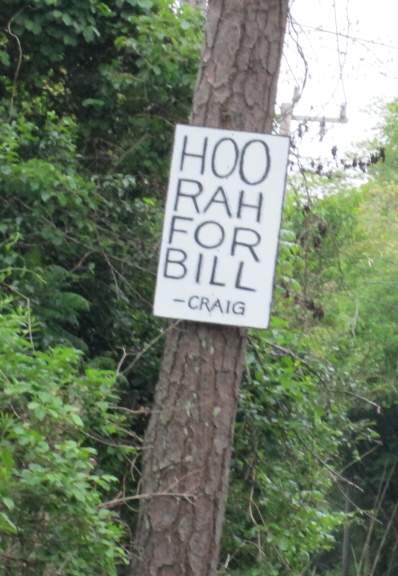
I almost ran off the road laughing when I first saw it: HOO RAH FOR BILL is back!

hoo rah signNot the paint-on-plywood original, of course. That was removed and destroyed on orders of the Tisbury building and zoning inspector in April 2011. He was responding, he claimed, to complaints received in the previous 12 to 14 months.
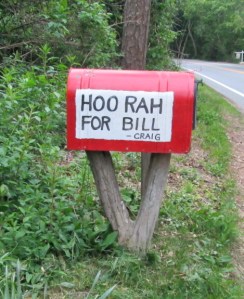
The sign went up in the summer of 1998, around the time President Bill Clinton arrived on the Vineyard for another presidential vacation. Washington and most of the rest of the country was in a tizzy over the Monica Lewinsky scandal. It was the brainchild of Craig Kingsbury, farmer and indisputable island character, who signed it with his first name.

Some people loved it. Others loathed it. Others felt queasy about it. As time passed, the loathing and the queasiness diminished. Subsequent doings in Washington and elsewhere put Bill Clinton’s peccadilloes in perspective. Craig died in 2002. HOO RAH FOR BILL reminded us of Craig — and of a time when characters thrived and signs didn’t have to be vetted by conservation commissions, historic district commissions, and small-minded building and zoning inspectors.

Then it disappeared. No one in the Kingsbury family was notified. By the time Craig’s daughter Kristen tracked it down, it had been destroyed.

It had taken almost a dozen years for complaints to reach the building and zoning inspector’s ears, and for him to realize that the sign “provided no useful information, is considered a blight on the landscape . . . is in violation of local and state law and should be immediately removed.”

hoo rah mailboxWhereupon he of course had to act immediately. Without letting Craig’s family know what he was doing. Of course.
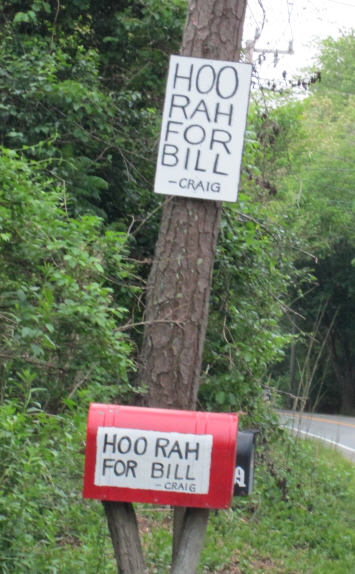
Not long afterward, a small reminder appeared on the mailbox under which the sign had hung.

And now HOO RAH FOR BILL is back in large letters.

I never took a photo of the original sign. I thought it would be there forever. I’m wiser now.

For a brief history of the sign, see the Vineyard Gazette story “Alas, Hoo Rah” (posted June 27, 2011). Read the comments too.

hoo rah sign & box


Posted in outdoors, public life | Tagged , , , , | 7 Comments

May License Plate Report

May started off slowly, but in the second half I scored some good ’uns: Alabama (on Main Street, Vineyard Haven); West Virginia (in the parking lot behind Windemere, where the Spirituals Choir I sing in has been rehearsing lately); Kansas and Tennessee (can’t remember off-hand where I saw them); and Missouri (spotted this morning in the West Tisbury School parking lot, which was crammed with cars during kids’ soccer practice).

I’m particularly pleased about Missouri, because I didn’t see a single “Show Me State” plate in all of 2013.

2014 may license map

Posted in license plates | Tagged | 2 Comments

An Uncommon Memorial

I was, as usual, running a little late. I was caught, totally not as usual, in a bumper-to-bumper traffic jam on sleepy Scotchman’s Bridge Road. Leaning out the window, I saw cars backed up behind me as far as the Granary Gallery on Old County. Ahead they stretched at least to the State Road intersection. When I got up that far, I could see the line continued to the Ag Hall entrance. I cut right and followed the clever pickup driver who figured he could get onto the Ag Hall grounds the back way. He was right.

program coverIt was a chilly, overcast Wednesday afternoon, and we were all headed for the memorial service for Pat Gregory, West Tisbury town moderator, business owner, former math teacher and soccer coach, and all-around good guy, who was shot and killed by a robber while hiking in northern California on May 16.

We converged on the Ag Hall from all directions, many of us bearing dishes for the potluck that would follow the service. My offering was cranberry walnut bread.

The place was, to put it mildly, packed. Estimates ran as high as a thousand, from toddlers up to octo- and probably nonagenarians. Just about everybody agreed that they’d never seen that many people in the Ag Hall at one time. The turnout was about three times that of the best-attended annual town meeting Pat ever presided over. (With a spread like that, we’d pack the school gym to capacity every April.)

crowd 1

At many memorial gatherings, there’s time for mourners to speak if they’re moved to do so. At the outset, the Rev. Cathlin Baker of the West Tisbury Congregational Church said there would be no open mike, which, given our sheer numbers, made sense to everybody. Besides, without Pat at the podium, ever attentive to raised hands and elapsed time, we could have extended the service into next week with our tributes.

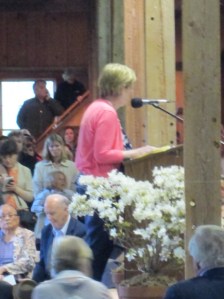
Selectman Cindy Mitchell spoke for the town.

Selectman Cindy Mitchell spoke for the town.

Instead, cards and pens were available on a table in the foyer. On each card “REMEMBERING PAT” was printed at the top, and there was plenty of room below to write memories of Pat and messages to his family. Pat’s grown children, Shannon and Tim, noted how important it had been, both while they were still in California and after they came home, to read all the comments posted to the newspaper stories and on Pat’s Facebook page. They looked forward to reading whatever we wrote.

This was not a mournful gathering. If black was worn, it was probably by coincidence. We laughed a lot, when the speakers recounted Pat stories and invoked a Pat Gregory that many of their listeners recognized. Pat, we were reminded, had drawn on his experience as a math teacher to run our town meetings. How lucky for us that he chose not to run them like the soccer referee he had also been.

Tim Gregory noted that though his father was gracious in many ways, he was not a gracious eater. Later on, as we served ourselves at the bountiful buffet, several of us thought we might spill a little barbecue sauce or salad dressing on our shirts in remembrance.

We heard stories of Pat as a very young man, before he and Dorothy moved to Martha’s Vineyard. Those who knew him primarily as a town official learned of his exploits on the golf course. Those who knew him as a business owner and computer expert heard of his skill as a teacher and coach. I knew Pat better when I left than when I arrived, but oddly enough, this didn’t make me regretful or sad. It made me feel lucky to have known him at all, and to be gathered in this hall with so many friends and neighbors and acquaintances who had known him too.

Only a few allusions were made to how Pat died. Daughter Shannon recognized that there is anger in the community but urged us to look beyond it. “Dad was not a man of vengeance,” she said.

Pat could have died just as unexpectedly of a heart attack, I thought, or in a car accident, or in a bad fall. In the Ag Hall on Wednesday afternoon, the how wasn’t all that important. What mattered more was the life that Pat lived, the example he set, the loss we all feel, and the fact that we’ve got each other to help us through it. Using a phrase that had been applied to her father, Shannon urged us to treat each other with “uncommon decency.”

Anger is natural, but it’s easy. Treating each other with uncommon decency, day in, day out — that’s hard. But if we manage to pull it off, who knows, decency might become more common and less difficult.

Community potluck in the Ag Hall foyer

Community potluck in the Ag Hall foyer

Posted in public life | Tagged , , , | 2 Comments

Sneak Preview

An excerpt from my novel in progress, working title Wolfie, has just been posted to the Writers & Other Animals blog.

Writers & Other Animals features regular guest bloggers, most of whom are writing about animals — especially dogs! While you’re over there, browse the previous posts. You’ll make the acquaintance of some good writers, and probably pick up a few ideas for further reading.

The excerpt, “Close Call,” features both Shannon and Pixel from my first novel, The Mud of the Place. This takes place about 10 years later. None of the humans are based on real people, but Pixel is based on the late, great Rhodry Malamutt and Wolfie (who isn’t named in the story) is based on my Travvy. Trav was born the day after Rhodry died, so the only way I could introduce them to each other was in fiction.

Rhodry in his favorite chair

Rhodry in his favorite chair

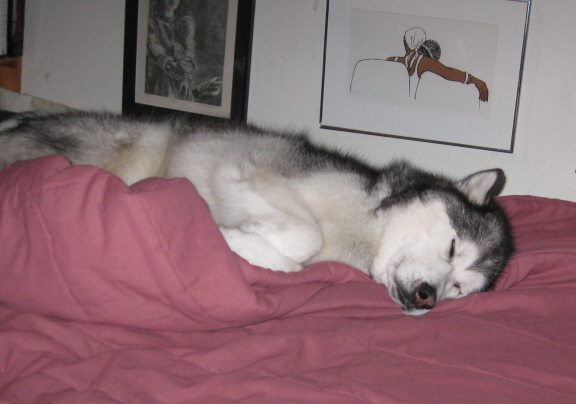
Travvy doesn't have a chair, but he likes my bed.

Travvy doesn’t have a chair, but he likes my bed.


Posted in writing | Tagged , , , , , | Leave a comment