Excuses first: In Write Through It, my other blog, I took on the 2017 A–Z Challenge: to blog thematically through the alphabet, starting with A on April 1 and ending with Z at the end of the month. To make it come out right, you got Sundays off (except for the last one). I met the challenge, and am pretty satisfied with my output, but From the Seasonally Occupied Territories languished in the meantime. Now I’m back. If you have any interest in writing or editing, do check out Write Through It: On Writing, Editing, and How to Keep Going.
***********************
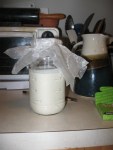
Starter jar
At the very beginning of April, or maybe it was the very end of March, I committed a Big Stupid. I bake all my own bread. For the last seven or eight years, nearly all of it has been sourdough. I keep a starter going in my refrigerator.
The drill goes like this:
- In the morning, take starter jar out of fridge, pour contents into big bread bowl, add cup of flour and about a cup and a half of warm water, whisk together, cover with towel, and leave out all day.
- In the evening, when doubled starter looks bubbly, pour a cup of it back into jar and return it to fridge.
- Add other ingredients to what remains in bread bowl — liquid, sweetener, oil, and enough flour to make a batter — mix well together, and leave out all night.
- The next morning, or when batter is well risen (in cool weather this can be closer to noon), mix in desired additions (raisins, nuts, chopped onions, grated Parmesan, whatever), salt, and however much flour it takes to make a kneadable dough, knead, let rise till doubled, then bake.

Pouring half of doubled starter back into starter jar
My Big Stupid? I forgot to double the starter before I started mixing up the batter. It’s said that you can’t teach an old dog new tricks, but it seems old dogs can learn new tricks without being taught, because in more than 30 years of using a sourdough starter I’d never done this before.
When I caught myself, I’d already added applesauce, water, and vegetable oil. My starter wasn’t starter anymore. I went ahead and made bread with it.
Over the years I’d given cups of starter to a couple of friends, so I contacted them to see if they had kept it going. If they had, they could double it and give me a cup, whereupon I’d be back in business. But they hadn’t.
I had, however, managed to start a starter from scratch before — when the starter I’d kept going for about 25 years died of neglect. (Aside: “And Will Rise? Notes on Lesbian Extinction,” my essay based on that experience, appeared in Trivia 10 and is still available online.) So I set to it, again following the instructions in Floss and Stan Dworkin’s Bake Your Own Bread, one of my two favorite bread books (the other is Beard on Bread).
Step #1
In a small bowl, mix up a cup of reconstituted skim milk from the dried skim milk that had been in my cupboard for god knows how long — probably since my last adventure in starter starting at least seven years ago — cover it with waxed paper, and leave it in an out-of-the-way place. (In take 2, I discovered that skim milk from the store works just as well.)
Step #2
Wait. The Dworkins say the milk will smell sour, but the decisive sign for me is that the milk becomes a custardy semi-solid. My apartment in early April is on the cool side, which probably explains why this took several days.
Step #3
Pour the custardy milk into a somewhat bigger (but not too big) bowl, whisk in a cup of unbleached white flour, and put it back in your out-of-the-way place.
Step #4
Wait. The milk-and-flour mixture’s job is to attract wild yeast from the air. Your job is to wait till yeast is in residence. When bubbles appear in the batter, you’ve probably got yeast. Like the curdling, this seems to take longer in a cool room than a warm one. If your mixture turns blue or green, what you’ve got in residence is mold, not yeast. Throw it out and start again.

Bubbly batter
At this point, I thought I was home free, so I doubled my new starter and began a new batch of bread. However, the batter did not rise noticeably overnight the way it usually does. It had bubbles, but it wasn’t especially bubbly. Was this due to the coolness of my apartment or was the wild yeast too weak to raise my batter? I left it out another day and a half. At the same time, hedging my bets, I repeated Step #1, this time using store-bought skim milk.
Lacking confidence in my wild yeast, I sprinked a scant half tablespoon of active dry yeast on the batter before I added the rest of the ingredients, kneaded it, and made two loaves out of it.
O me of little faith! When I bit into my new loaf, the telltale tang told me at once that wild yeast were in residence and my starter was sour. Whether it was peppy enough to raise bread on its own I wasn’t sure. Hence —
Step #5 (optional)
I poured the starter out of its jar and back into a bowl, fed it a heaping spoonful of flour, and returned it to the out-of-the-way place (on top of the Rinnai heater behind my desk, in case you’re wondering), which it now shared with starter #2, which seemed to be coming along fine. For two or three days I fed starter #1 a spoonful of flour each day, along with enough water to maintain its consistency (more liquid than batter). By this point I was sure: the starter was rising up the sloping side of the bowl.
Now I had two starters. A single home baker does not need two starters. I made pancakes with starter #2, saving a cup of the starter just in case.
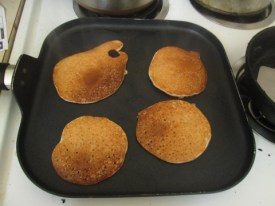
Sourdough pancakes

Starter #1 (right) and starter #2
Saturday morning I commenced the real test of starter #1, going back to step #1 (and remembering to double the starter this time).
Sunday morning, when I peeked under the towel that covered my bread bowl, I knew starter #1 had what it took. The batter had risen well up the sides of my bread bowl, just the way it was supposed to.
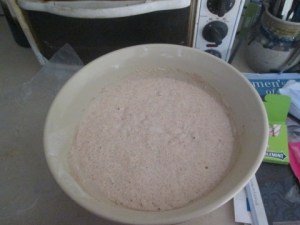
Risen batter
Before 2:30 p.m. three perfect loaves were cooling on their racks. (In my experience, sourdough takes longer to raise bread than active dry yeast, but the time was on target for this time of year.) In this case, the proof isn’t in the pudding; it’s in the bread.

Ready to rise

Risen
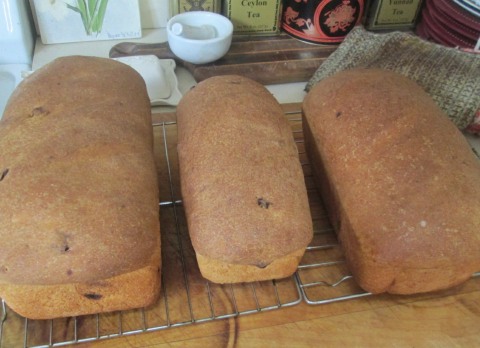
Baked


 There are only two contested races on West Tisbury’s town election ballot, and so far the buzz is not exactly overwhelming, but the turnout for Candidates’ Night on Wednesday was respectable enough.



 I’d already figured that the only time Travvy and I could get in an afternoon walk was between rehearsal and Richard Knabel’s party (reception?) to kick off his campaign for re-election as West Tisbury selectman. It started at 5 and I didn’t get there till about 5:20, but this isn’t the sort of gathering where you have to show up on the dot. Showing up on the dot is not a Vineyard specialty. “Vineyard time” can mean as much as an hour late. This becomes less amusing the more meetings, rehearsals, and other events you’re supposed to go to.










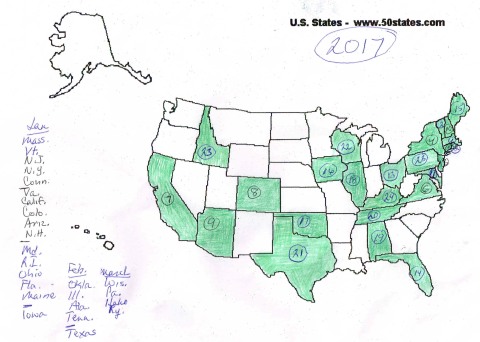
 February is generally a slow month — who comes to a New England seaside resort in the dead of winter? — but the month just past brought five good ones: Oklahoma, Illinois, Alabama, Tennessee, and Texas. Texas actually showed up earlier in the month, but it’s common enough that I forgot it was a first sighting and didn’t write it down.
 Here’s last February’s map for comparison. The relatively early arrivals of Ohio, Illinois, Iowa, and Colorado make a big difference in how the map looks.




 From the Seasonally Occupied Territories . . .